
Photoprotective efficacy and safety evaluation of Syzygium aqueum leaf extract in topical sunscreen formulations
DOI:
https://doi.org/10.29303/aca.v9i1.258Keywords:
Syzygium aqueum, sunscreen formulation, UV protection, natural extract, SPFAbstract
Abstract:
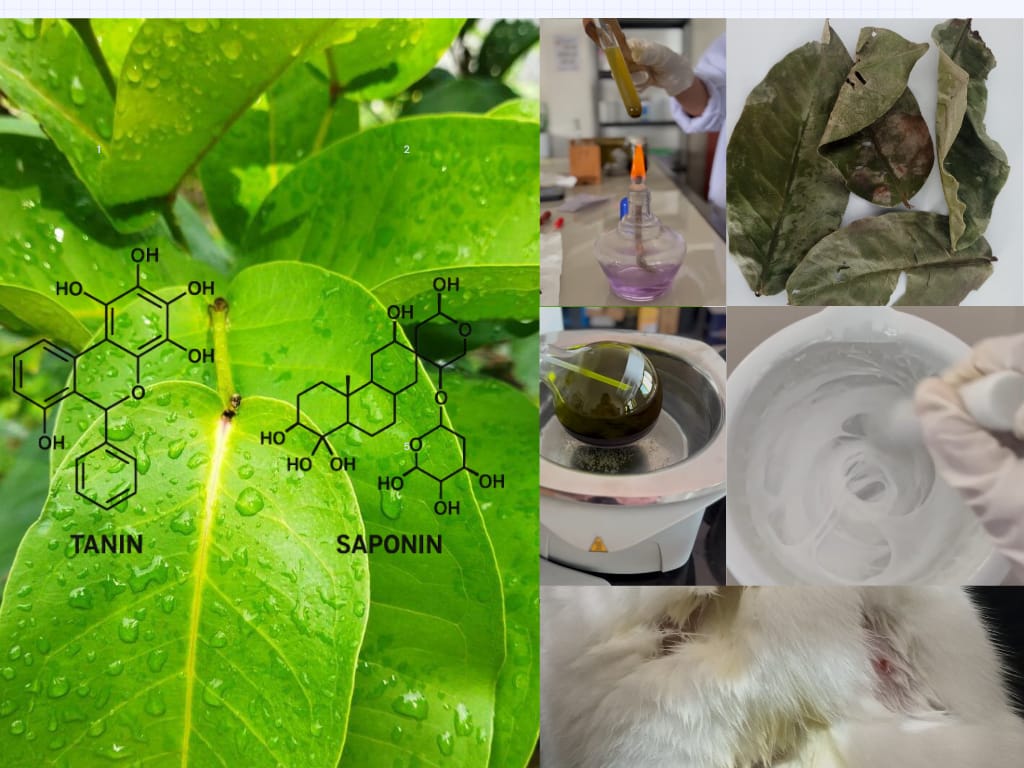
Ultraviolet (UV) radiation is a major environmental hazard linked to erythema, photoaging, and skin cancers. While synthetic UV filters such as oxybenzone and octinoxate are widely used in commercial sunscreens, their potential for irritation, allergic reactions, and hormonal disruption raises safety concerns. This study aimed to develop and evaluate a sunscreen formulation using Syzygium aqueum (water apple) leaf extract, a plant rich in flavonoids, tannins, and phenolic compounds with antioxidant and UV-absorbing activity. The extract was obtained via maceration with 96% ethanol and incorporated into four cream formulations: a control without extract (F0) and three with 1%, 3%, and 5% concentrations (F1–F3). Physicochemical properties, pH, sun protection factor (SPF), and irritation potential were assessed. All formulations showed uniform consistency without phase separation, with pH values ranging from 6.3 to 6.6, which are suitable for topical application. SPF analysis revealed a concentration-dependent increase, from 7.0 in F0 to 18.0 ± 1.2 in F3, indicating enhanced photoprotective capacity. Irritation testing on rabbits showed no erythema or edema across all samples, confirming dermatological safety. Overall, the incorporation of S. aqueum extract significantly improved UV-protective activity while maintaining skin compatibility. These findings highlight the potential of S. aqueum as a safe and effective natural sunscreen ingredient and support its application in the development of botanical-based cosmetic products.
Downloads
References
[1] Agrawal R, Jurel P, Deshmukh R, Harwansh RK, Garg A, Kumar A, et al. Emerging Trends in the Treatment of Skin Disorders by Herbal Drugs: Traditional and Nanotechnological Approach. Pharmaceutics. 2024;16(7):1–37.
[2] Chang HJ, Kim YH, Kang YH, Choi MH, Lee JH. Antioxidant and antibacterial effects of medicinal plants and their stick-type medicinal concentrated beverages. Food Sci Biotechnol [Internet]. 2020;29(10):1413–23. Available from: https://doi.org/10.1007/s10068-020-00793-9.
[3] Palanisamy UD, Ling LT, Manaharan T, Sivapalan V, Subramaniam T, Helme MH, et al. Standardized extract of Syzygium aqueum: A safe cosmetic ingredient. Int J Cosmet Sci. 2011;33(3):269–75.
[4] Baldi M, Reynaud R, Lefevre F, Fleury M, Scandolera A, Maramaldi G. Synergistic use of bioactive agents for the management of different skin conditions: an overview of biological activities. Eur Rev Med Pharmacol Sci. 2023;27(4):1450–66.
[5] Mulqie L, Suwendar S, Choesrina R, Mardliyani D. Potensi Antibakteri Fraksi Air Daun Jambu Air [Eugenia Aqueum (Burm. F) Alston] Terhadap Staphylococcus aureus dan Escherichia coli. J Ilm Farm Farmasyifa. 2021;4(1):98–104.
[6] Mewada R, Shah Y. Recent advances in sunscreen agents and their formulations: A review. Int J Pharm Chem Anal. 2023;9(4):141–50.
[7] Tehrani M, Chandran S, Sharif Hossain ABM, Nasrulhaq-Boyce A. Postharvest physico-chemical and mechanical changes in jambu air (Syzygium aqueum Alston) fruits. Aust J Crop Sci. 2011;5(1):32–8.
[8] Rusydi SH, Angela SR. Formulasi Gel Sunscreen Ekstrak Daun Jambu Air (Syzygium aqueum (Burm. f) Alston). Majalah Farmasetika. 2023 Oct 17;9(1):24-35.
[9] Cushnie TPT, Lamb AJ. Antimicrobial activity of flavonoids. Int J Antimicrob Agents. 2005;26(5):343–56.
[10] Leekha S, Terrell CL, Edson RS. General principles of antimicrobial therapy. Mayo Clin Proc [Internet]. 2011;86(2):156–67. Available from: http://dx.doi.org/10.4065/mcp.2010.0639
[11] Islam R, Parvin S, Islam E. Antioxidant and hepatoprotective activity of an ethanol extract of Syzygium jambos (L.) leaves. Drug Discov Ther. 2011;6(4):205–11.
[12] Itam A, Wati MS, Agustin V, Sabri N, Jumanah RA, Efdi M. Comparative Study of Phytochemical, Antioxidant, and Cytotoxic Activities and Phenolic Content of Syzygium aqueum (Burm. f. Alston f.) Extracts Growing in West Sumatera Indonesia. Sci World J. 2021;2021.
[13] Petersen B, Wulf HC. Application of sunscreen - theory and reality. Photodermatol Photoimmunol Photomed. 2014;30(2–3):96–101.
[14] Suwarna ER. Isolasi Senyawa Aktif Fraksi N-Heksana dari Ekstrak Etanol Daun Jambu Biji (Psidium guajava L.) dan Uji Aktivitas Antikanker Payudara dalam Formula Sediaan Nanopartikel Self-Nano Emulsifying Drug Delivery System (SNEDDS) Terhadap Sel T47D dan MCF-7. SKRIPSI Univ Islam Indones. 2020;69.
[15] Manaharan T, Appleton D, Cheng HM, Palanisamy UD. Flavonoids isolated from Syzygium aqueum leaf extract as potential antihyperglycaemic agents. Food Chem. 2012;132(4):1802–7.
[16] Nielsen GD, Wolkoff P, Alarie Y. Sensory irritation: Risk assessment approaches. Regul Toxicol Pharmacol. 2007;48(1):6–18.
[17] Robinson MK, Perkins MA. A strategy for skin irritation testing. Am J Contact Dermat. 2002;13(1):21–9.
[18] Cushnie T, Lamb AJ. Antimicrobial activity of flavonoids International Journal of Antimicrobial Agents 26 (5): 343-56.
[19] Chang HJ, Kim YH, Kang YH, Choi MH, Lee JH. Antioxidant and antibacterial effects of medicinal plants and their stick-type medicinal concentrated beverages. Food Science and Biotechnology. 2020 Oct;29:1413-23.
[20] Leekha S, Terrell CL, Edson RS. General principles of antimicrobial therapy. In Mayo clinic proceedings 2011 Feb 1 (Vol. 86, No. 2, pp. 156-167). Elsevier.
[21] Foti C, Despina G, Di Veroli A. Antioxidant and Sunscreen Properties of Plant Extracts for Skin Protection. J Cosmet Sci. 2019;70(6):281-290.
[22] Nirmal S, Priya M, Sekar S. Evaluation of Sunscreen Activity of Various Plant Extracts: A Review. Int J Cosmet Sci. 2018;40(4):345-352.
[23] Wong D, Tan J. The Role of Flavonoids in UV Protection and Skin Health. J Nat Prod. 2019;82(6):1452-1459.
Downloads
Published
How to Cite
Issue
Section
License
Copyright (c) 2026 Nurul Indriani, Lina Yunita

This work is licensed under a Creative Commons Attribution-NonCommercial-ShareAlike 4.0 International License.
Authors who publish with ACA: Acta Chimica Asiana agree to the following terms:
- Authors retain copyright and grant the journal right of first publication with the work simultaneously licensed under a Creative Commons Attribution-NonCommercial-ShareAlike 4.0 International License. This license allows authors to use all articles, data sets, graphics, and appendices in data mining applications, search engines, web sites, blogs, and other platforms by providing an appropriate reference. The journal allows the author(s) to hold the copyright without restrictions and will retain publishing rights without restrictions.
- Authors are able to enter into separate, additional contractual arrangements for the non-exclusive distribution of the journal's published version of the work (e.g., post it to an institutional repository or publish it in a book), with an acknowledgement of its initial publication in ACA: Acta Chimica Asiana.
- Authors are permitted and encouraged to post their work online (e.g., in institutional repositories or on their website) prior to and during the submission process, as it can lead to productive exchanges, as well as earlier and greater citation of published work (See The Effect of Open Access).



 Indonesian Chemical Society, Chapter Nusa Tenggara. Jalan Majapahit 62 Mataram, University of Mataram, 83125, Indonesia