
Determination of total flavonoid content in the ethanol extract of Renggak fruit (Amomum dealbatum roxb.) using uv–vis spectrophotometry
DOI:
https://doi.org/10.29303/aca.v9i1.278Keywords:
Amomum dealbatum Roxb., Total Flavonoid Content, Quercetin, Rutin, UV-Vis SpectrophotometryAbstract
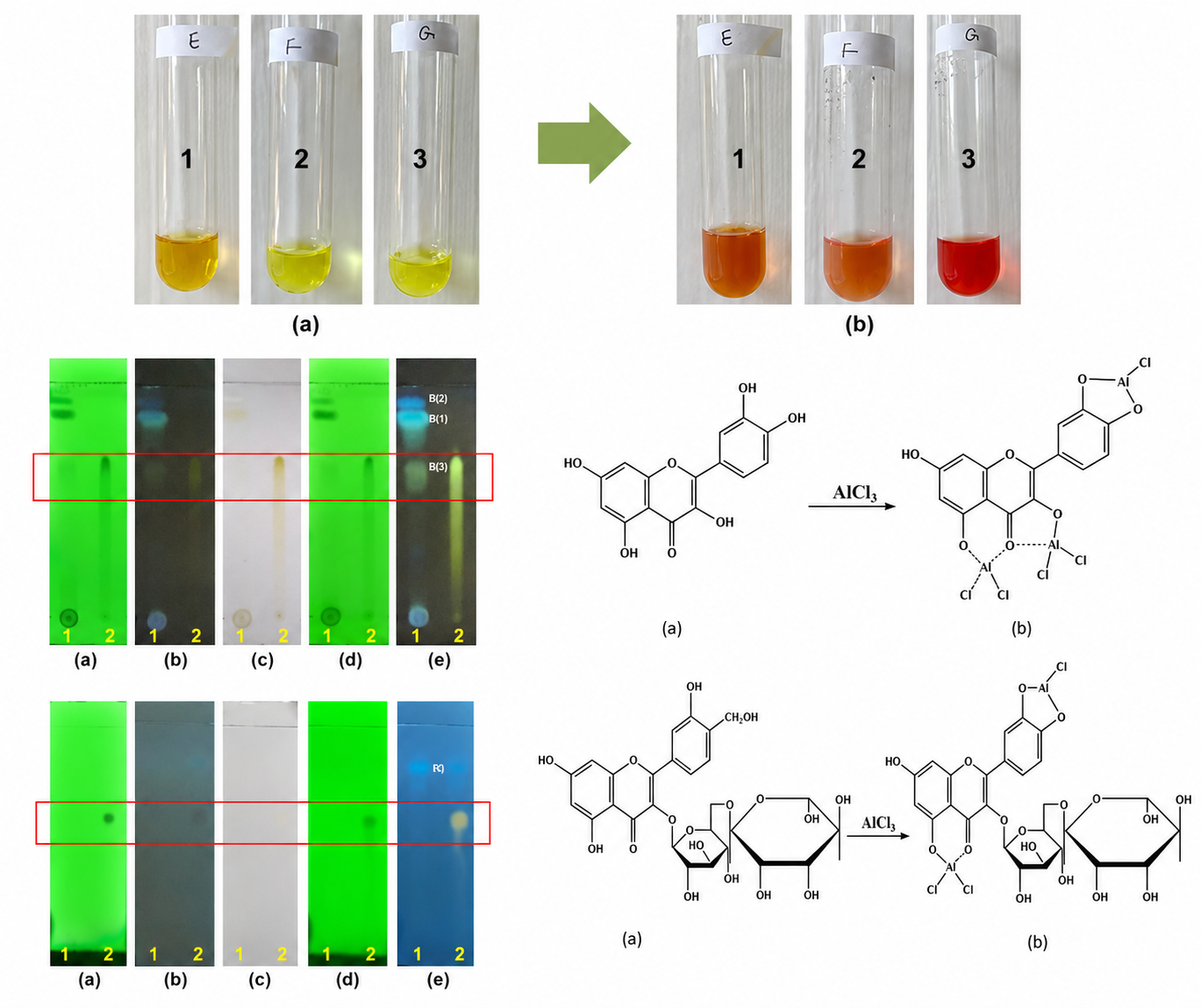
The local plant, Amomum dealbatum Roxb. (A. dealbatum), is native to Lombok Island. This plant is a member of the Zingiberaceae family, which is recognised to have antifungal and antibacterial properties due to the presence of secondary metabolites, particularly flavonoids. Nevertheless, there is still little information and few reports regarding the overall flavonoid content of A. dealbatum fruit. As a chemical marker to support an extract’s quality control and pharmacological effects, Total Flavonoid Content (TFC) determination is crucial. The purpose of this work was to use UV-Vis spectrophotometry to measure the TFC in the ethanol extract of A. dealbatum fruit. Using a 1:10 solvent: simplicia ratio and maceration with 96% ethanol, the extraction procedure was completed. Thin Layer Chromatography (TLC) and the Wilstatter test were then used to identify the extracted material qualitatively. Using a UV-Vis spectrophotometer and a colourimetric approach, TFC was measured. The ethanol extract of A. dealbatum fruit contained flavonoids, as indicated by the qualitative analysis. The TFC values were 3.0833 ± 0.1439 mg rutin equivalent (RE)/g extract and 0.4858 ± 0.0014 mg quercetin equivalent (QE)/g extract. These findings suggest that the ethanol extract of A. dealbatum contains more flavonoid glycosides than flavonoid aglycones. This finding shows potential for further development. As this study is still limited to TFC at the extract level, further research on TFC at the fraction, sub-fraction, and isolate levels is needed to obtain more specific information about the active compounds contributing to its biological activities. In addition, further pharmacological testing is required to confirm the therapeutic potential of A. dealbatum and support its development as a candidate raw material for traditional medicine industries.
Downloads
References
[1] Cahyani, D. F., & Hidayati, A. R. (2024). Article Review: Pharmacological Activities of Renggak Plant (Amomum dealbatum Roxb.). Jurnal Biologi Tropis, 24(4), 612–619. https://doi.org/10.29303/jbt.v24i4.7599
[2]. Hanifa, N. I., Wirasisya, D. G., Muliani, A. E., Utami, S. B., & Sunarwidhi, A. L. (2021). Phytochemical Screening of Decoction and Ethanolic Extract of Amomum dealbatum Roxb. Leaves. Jurnal Biologi Tropis, 21(2), 510–518. https://doi.org/10.29303/jbt.v21i2.2758
[3]. Tushar, Basak, S., Sarma, G. C., & Rangan, L. (2010). Ethnomedical uses of Zingiberaceous plants of Northeast India. Journal of Ethnopharmacology, 132(1), 286–296. https://doi.org/10.1016/j.jep.2010.08.032
[4]. Khisha, T., Karim, R., Chowdhury, S. R., & Banoo, R. (2012). Ethnomedical Studies of Chakma Communities of Chittagong Hill Tracts, Bangladesh. Bangladesh Pharmaceutical Journal.
[5]. Dalisay, J. A. G. P., Bangcaya, P. S., & Naive, M. A. K. (2018). Taxonomic Studies and Ethnomedicinal uses of Zingiberaceae in the Mountain Ranges of Northern Antique Philippines JADE ANN GRACE P. DALISAY-R8.pdf. 10(2), 68–73.
[6]. Rachkeeree, A., Kantadoung, K., Puangpradub, R., & Suksathan, R. (2020). Phytochemicals, Antioxidants and Anti-tyrosinase Analyses of Selected Ginger Plants. Pharmacognosy Journal, 12(4), 872–883. https://doi.org/10.5530/pj.2020.12.125
[7]. Kusuma, A. S. W., Nurmalinda, S., Ramadhania, Z. M., & Indradi, R. B. (2021). Antibacterial Activity of Hanggasa Fruit Ethanolic Extract (Amomum dealbatum Roxb.) Againts Eschericia coli and Bacillus cereus. 1(1).
[8]. Nufus, N. H. (2020). ANALISIS FITOKIMIA DAN UJI POTENSI EKSTRAK BUAH RENGGAK (Amomum Dealbatum) SEBAGAI PESTISIDA NABATI TERHADAP JAMUR Pyricularia Oryzae DAN BAKTERI Xanthomonas oryzae. Bioscientist : Jurnal Ilmiah Biologi, 8(1), 115. https://doi.org/10.33394/bjib.v8i1.2661
[9]. Roy, A., Khan, A., Ahmad, I., Alghamdi, S., Rajab, B. S., Babalghith, A. O., Alshahrani, M. Y., Islam, S., & Islam, Md. R. (2022). Flavonoids a Bioactive Compound from Medicinal Plants and Its Therapeutic Applications. BioMed Research International, 2022(1), 5445291. https://doi.org/10.1155/2022/5445291
[10]. Ciumărnean, L., Milaciu, M. V., Runcan, O., Vesa, Ștefan C., Răchișan, A. L., Negrean, V., Perné, M.-G., Donca, V. I., Alexescu, T.-G., Para, I., & Dogaru, G. (2020). The Effects of Flavonoids in Cardiovascular Diseases. Molecules, 25(18), 4320. https://doi.org/10.3390/molecules25184320
[11]. Maaliki, D., Shaito, A. A., Pintus, G., El-Yazbi, A., & Eid, A. H. (2019). Flavonoids in hypertension: A brief review of the underlying mechanisms. Current Opinion in Pharmacology, 45, 57–65. https://doi.org/10.1016/j.coph.2019.04.014
[12]. Banjarnahor, S. D. S., & Artanti, N. (2015). Antioxidant properties of flavonoids. Medical Journal of Indonesia, 23(4), 239–244. https://doi.org/10.13181/mji.v23i4.1015
[13]. Martín, M. Á., & Ramos, S. (2021). Dietary Flavonoids and Insulin Signaling in Diabetes and Obesity. Cells, 10(6), 1474. https://doi.org/10.3390/cells10061474
[14]. Chen, A., Xiang, W., Liu, D., Liu, C., & Yang, L. (2016). Determination of Total Flavonoids and Its Antioxidant Ability in <i> Houttuynia cordata </i> Journal of Materials Science and Chemical Engineering, 04(02), 131–136. https://doi.org/10.4236/msce.2016.42014
[15]. Syarifah, A. L., Retnowati, R., & Soebiantoro, S. (2019). Characterization of Secondary Metabolites Profile of Flavonoid from Salam Leaves (Eugenia polyantha) Using TLC and UVSpectrophotometry. Pharmaceutical Sciences and Research, 6(3). https://doi.org/10.7454/psr.v6i3.4219
[16]. Zuraida & Sulistiyani. (2020). Screening phytochemical compound of Alstonia scholaris R.Br in different sites in Indonesia. IOP Conference Series: Earth and Environmental Science, 591(1), 012034. https://doi.org/10.1088/1755-1315/591/1/012034
[17]. Sudira, I. W., Merdana, I. M., & Qurani, S. N. (2019). Preliminary Phitochemical Analysis of Guava Leaves (Psidium guajava L.) as Antidiarrheal in Calves. Advances in Tropical Biodiversity and Environmental Sciences.
[18]. Sharma, V., & Paliwal, R. (2013). Preliminary phytochemical investigation and thin layer chromatography profiling of sequential extracts of Moringa oleifera pods. International Journal of Green Pharmacy.
[19]. Pobłocka-Olech, L., Migas, P., & Krauze-Baranowska, M. (2018). TLC determination of some flavanones in the buds of different genus Populus species and hybrids.
[20]. Arifin, B., Hasnirwan, & Firmansyah. (2015). ISOLASI SENYAWA FLAVONOID DARI DAUN SALAM (Polyanthi folium). 277–283.
[21]. Hartono, Y. I., Widyastuti, I., Luthfah, H. Z., Islamadina, R., Can, A. T., & Rohman, A. (2020).
Total Flavonoid Content and Antioxidant Activity of Temu Mangga (Curcuma mangga Val. & Zijp) and its Classification with Chemometrics. Journal of Food and Pharmaceutical Sciences, 4. https://doi.org/10.22146/jfps.650
[22]. Sopiah, B., Muliasari, H., & Yuanita, E. (2019). Skrining Fitokimia dan Potensi Aktivitas Antioksidan Ekstrak Etanol Daun Hijau dan Daun Merah Kastuba. 17.
[23]. Ismail, B., & Nielsen, S. S. (2010). Basic Principles of Chromatography. In S. S. Nielsen (Ed.), Food Analysis (pp. 473–498). Springer US. https://doi.org/10.1007/978-1-4419-1478-1_27
[24]. Ulfah, M., Mulyati, S., & Yunita, N. (2022). Standarisasi dan Aktivitas Tabir Surya Ekstrak Etanol Daun Kakao (Theobroma cacao L.). Jurnal Pharmascience, 9(1), 96. https://doi.org/10.20527/jps.v9i1.11385
[25]. Nurcholis, W., Sya’bani Putri, D. N., Husnawati, H., Aisyah, S. I., & Priosoeryanto, B. P. (2021). Total flavonoid content and antioxidant activity of ethanol and ethyl acetate extracts from accessions of Amomum compactum fruits. Annals of Agricultural Sciences, 66(1), 58–62. https://doi.org/10.1016/j.aoas.2021.04.001
[26]. Butsat, S., & Siriamornpun, S. (2016). Effect of solvent types and extraction times on phenolic and flavonoid contents and antioxidant activity in leaf extracts of Amomum chinense C. 23(1), 180–187.
[27]. Magalingam, K. B., Radhakrishnan, A., & Haleagrahara, N. (2016). Protective effects of quercetin glycosides, rutin, and isoquercetrin against 6-hydroxydopamine (6-OHDA)-induced neurotoxicity in rat pheochromocytoma (PC-12) cells. International Journal of Immunopathology and Pharmacology, 29(1), 30–39. https://doi.org/10.1177/0394632015613039
[28]. Alseekh, S., Perez De Souza, L., Benina, M., & Fernie, A. R. (2020). The style and substance of plant flavonoid decoration; towards defining both structure and function. Phytochemistry, 174, 112347. https://doi.org/10.1016/j.phytochem.2020.112347
Downloads
Published
How to Cite
Issue
Section
License
Copyright (c) 2026 Lalu Ardian Hadi, Rizqa Fersiyana Deccati, Handa Muliasari, Nisa Isneni Hanifa

This work is licensed under a Creative Commons Attribution-NonCommercial-ShareAlike 4.0 International License.
Authors who publish with ACA: Acta Chimica Asiana agree to the following terms:
- Authors retain copyright and grant the journal right of first publication with the work simultaneously licensed under a Creative Commons Attribution-NonCommercial-ShareAlike 4.0 International License. This license allows authors to use all articles, data sets, graphics, and appendices in data mining applications, search engines, web sites, blogs, and other platforms by providing an appropriate reference. The journal allows the author(s) to hold the copyright without restrictions and will retain publishing rights without restrictions.
- Authors are able to enter into separate, additional contractual arrangements for the non-exclusive distribution of the journal's published version of the work (e.g., post it to an institutional repository or publish it in a book), with an acknowledgement of its initial publication in ACA: Acta Chimica Asiana.
- Authors are permitted and encouraged to post their work online (e.g., in institutional repositories or on their website) prior to and during the submission process, as it can lead to productive exchanges, as well as earlier and greater citation of published work (See The Effect of Open Access).



 Indonesian Chemical Society, Chapter Nusa Tenggara. Jalan Majapahit 62 Mataram, University of Mataram, 83125, Indonesia