
Bioactive peptides from traditional homemade fermented foods as an alternative for treatment
DOI:
https://doi.org/10.29303/aca.v8i2.252Keywords:
Fermented foods, bioactive peptides, anti-hypertension, anti-diabetic, anti-cancerAbstract
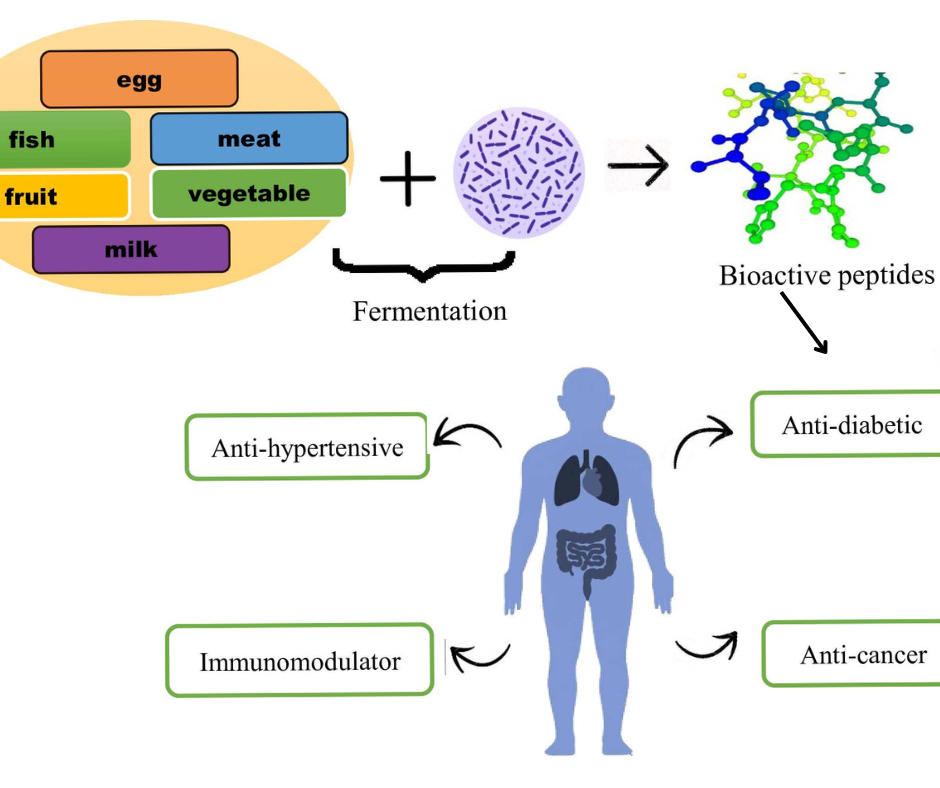
Bioactive peptides in fermented foods are attracting scientific interest due to their prospective applications as nutraceutical and functional foods. Conventional fermented foods are naturally processed at home through the action of lactic acid bacteria (LAB). These bacteria break down food components and generate lactic acid, various organic acids, hydrogen peroxide, carbon dioxide, and short-chain peptides, which offer numerous health benefits. The bioactive peptides formed during fermentation exhibit diverse biological functions influenced by their structural compositions. Following enzymatic hydrolysis, peptides initially inactive within the native protein matrix are released and exhibit biological activity. This review aims to comprehensively examine the functional properties of bioactive peptides derived from the fermentation of traditional foods, with a particular emphasis on their therapeutic potential, including antidiabetic, antihypertensive, and anticarcinogenic activities. This review examines the health benefits of various bioactive peptides produced by lactic acid bacteria during the fermentation of traditional foods. Microbial bioactivity during the fermentation process can produce hydrolytic enzymes that break down macromolecules in food into smaller compounds, such as bioactive peptides. A wide range of peptides have been identified as improving insulin uptake, decreasing blood glucose concentrations, and inhibiting key enzymes involved in the pathogenesis of diabetes. Specific peptides exert antihypertensive effects by acting as angiotensin-converting enzyme (ACE) inhibitors, thereby preventing the transformation of angiotensin I into angiotensin II. Moreover, some bioactive peptides demonstrate immunomodulatory properties by enhancing immune responses and inducing apoptosis in cancer cells. This article provides a comprehensive overview of the therapeutic and health-promoting potentials of bioactive peptides derived from fermented foods.
Downloads
Downloads
Published
How to Cite
Issue
Section
License
Copyright (c) 2025 Nabella Suraya, Titania Tjandrawati Nugroho, Ismawati Ismawati, Saryono Saryono

This work is licensed under a Creative Commons Attribution-NonCommercial-ShareAlike 4.0 International License.
Authors who publish with ACA: Acta Chimica Asiana agree to the following terms:
- Authors retain copyright and grant the journal right of first publication with the work simultaneously licensed under a Creative Commons Attribution-NonCommercial-ShareAlike 4.0 International License. This license allows authors to use all articles, data sets, graphics, and appendices in data mining applications, search engines, web sites, blogs, and other platforms by providing an appropriate reference. The journal allows the author(s) to hold the copyright without restrictions and will retain publishing rights without restrictions.
- Authors are able to enter into separate, additional contractual arrangements for the non-exclusive distribution of the journal's published version of the work (e.g., post it to an institutional repository or publish it in a book), with an acknowledgement of its initial publication in ACA: Acta Chimica Asiana.
- Authors are permitted and encouraged to post their work online (e.g., in institutional repositories or on their website) prior to and during the submission process, as it can lead to productive exchanges, as well as earlier and greater citation of published work (See The Effect of Open Access).



 Indonesian Chemical Society, Chapter Nusa Tenggara. Jalan Majapahit 62 Mataram, University of Mataram, 83125, Indonesia